
Durante il Paris Déco Off 2026, tra showroom affollati e presentazioni spettacolari, Doodesign ha scelto di rallentare il passo e cercare un luogo di affascinante ricco di storia. Non poteva mancare la visita a L’Hôtel, uno degli indirizzi più iconici di Parigi, dove Fortuny ha presentato in forma volutamente intima la sua nuova collezione POLPO, allestita nella lobby di questo straordinario edificio noto per la sua architettura visionaria e per essere stato l’ultima dimora di Oscar Wilde.
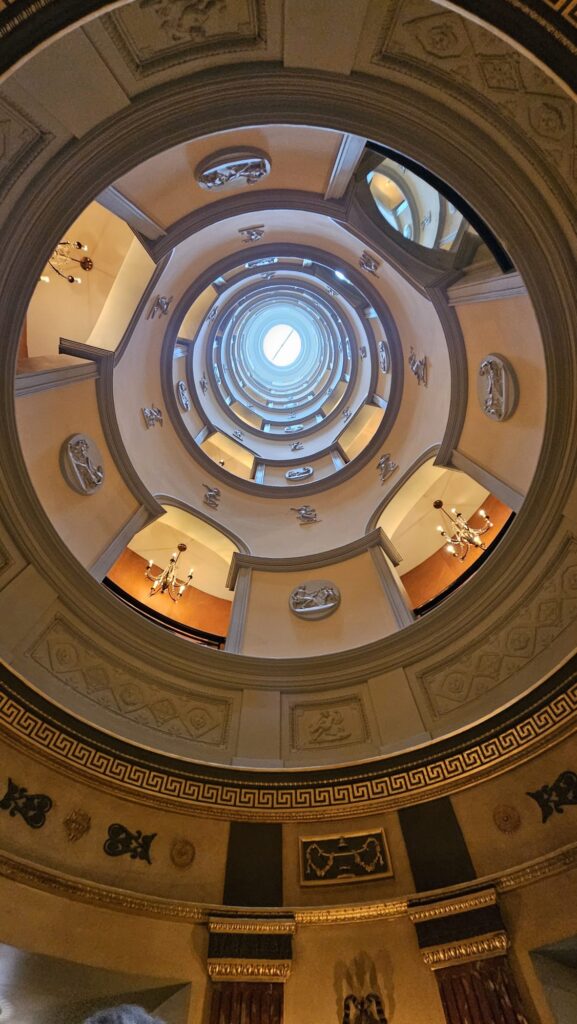
Un luogo carico di memoria, dunque, perfetto per accogliere una collezione che fa del dialogo con il passato il proprio motore creativo.
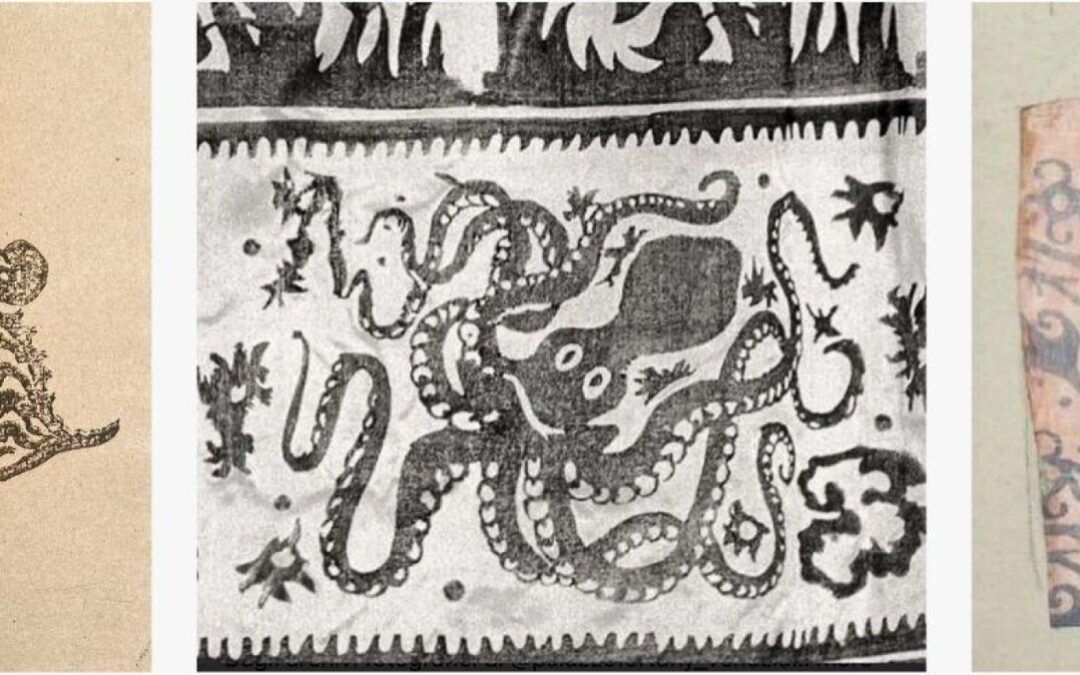
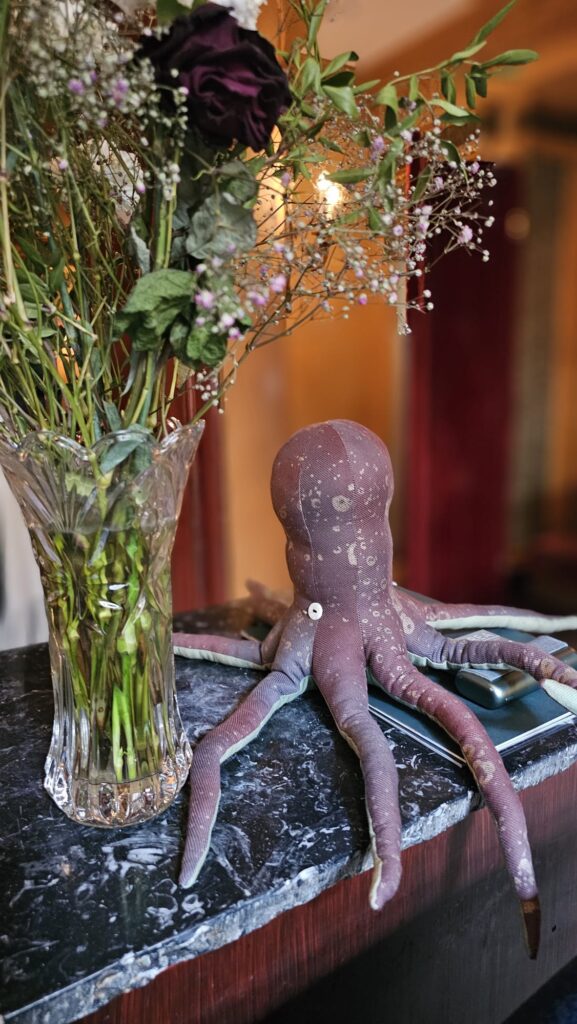
Alla base di POLPO c’è un dettaglio apparentemente minimo ma profondamente simbolico: uno dei primi disegni di Mariano Fortuny raffigura un polpo con sette tentacoli anziché otto. Un’anomalia intenzionale, che nel tempo è diventata metafora dell’identità stessa della Maison: ciò che non si vede, il gesto nascosto, la tecnica celata, la tensione continua verso la reinvenzione.
Un segno che invita a guardare oltre la superficie ornamentale.
Le ricerche condotte negli archivi Fortuny hanno portato alla scoperta dell’origine di quel disegno: un vaso minoico dell’antichità, decorato con forme fluide, geometrie organiche e rappresentazioni ritmiche del movimento. Un immaginario che risuona con forza nel linguaggio visivo della casa veneziana e che oggi viene riletto attraverso una sensibilità contemporanea.
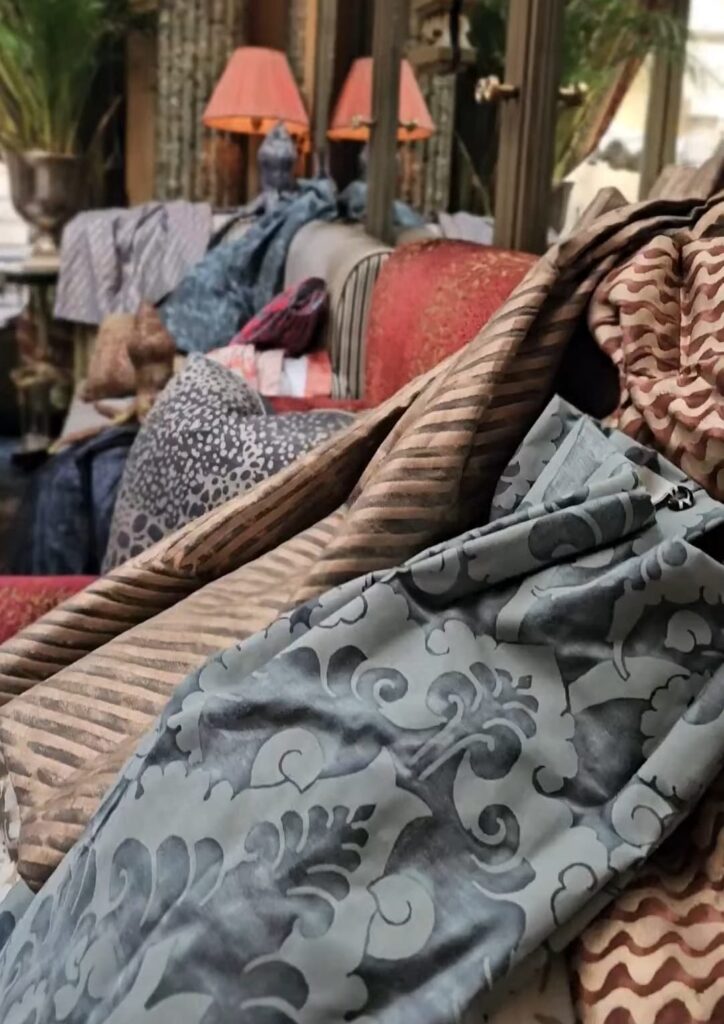
Nei laboratori storici di Venezia, utilizzando i processi originali messi a punto da Fortuny oltre un secolo fa, sono state sviluppate nuove metodologie che permettono a colore e forma di migrare, fondersi e accumularsi in modo non convenzionale.
Il risultato sono tessuti che Fortuny definisce “Landscapes”: superfici vive, irregolari, quasi geologiche, che evocano le venature del marmo, l’acqua increspata della laguna, le nuvole in movimento, le facciate consumate di Venezia.
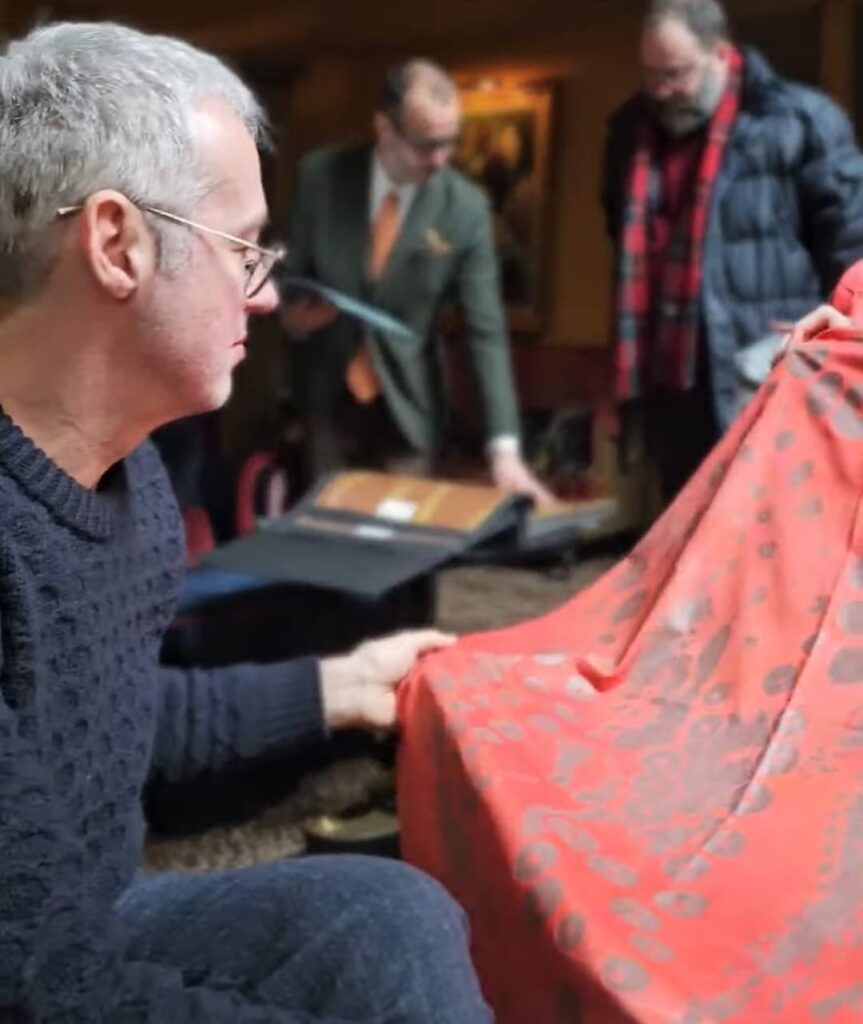
La collezione si articola in sei pattern distinti, ciascuno nato dall’intersezione tra mito, osservazione della natura e cultura materiale veneziana. I nomi stessi attingono a etimologie antiche, alla biologia marina e all’architettura della Serenissima, rafforzando quel dialogo costante tra passato e presente che è cifra inconfondibile di Fortuny. Non semplici decori, ma meditazioni visive su acqua, movimento e trasformazione.
Alla presentazione era presente anche il Creative Director di Fortuny, Mickey Riad, che ha sottolineato con chiarezza la continuità di questo percorso:
“We maintain an ongoing dialogue with our Founder by embracing the research, development, and experimentation that defined his scientific artistry.”
Una dichiarazione che sintetizza perfettamente lo spirito di POLPO: non nostalgia, ma fedeltà attiva. Un fare artigianale che non replica, ma esplora. Un’eredità che non si conserva sottovetro, ma si mette costantemente alla prova.
In un contesto come il Paris Déco Off, POLPO si è distinta proprio per questo: per la capacità di parlare sottovoce, affidandosi alla profondità della ricerca e alla forza silenziosa della materia. Una lezione che Doodesign ha saputo cogliere, ancora una volta, nel segno di un design che è prima di tutto cultura.
English version
POLPO, Fortuny, and the Art of the Unfinished: An Intimate Visit to the Heart of Venetian Craft
During Paris Déco Off 2026, amid crowded showrooms and spectacular presentations, Doodesign chose to slow down and seek meaning. A visit to L’Hôtel was unmissable—the iconic Parisian address where Fortuny unveiled its new POLPO collection in an intentionally intimate setting, staged in the lobby of this extraordinary building, renowned for its striking architecture and as the final home of Oscar Wilde.
A place steeped in memory, and therefore the perfect setting for a collection that makes dialogue with the past its creative engine.
At the origin of POLPO lies a detail that is seemingly minor yet deeply symbolic: one of Mariano Fortuny’s early drawings depicts an octopus with seven arms instead of eight. An intentional anomaly that has come to embody the enduring mystique of the House—what remains unseen, the concealed gesture, the hidden technique, and the perpetual drive toward reinvention.
A sign that invites us to look beyond surface ornament.
Research conducted within the Fortuny archives revealed the origin of this drawing: an ancient Minoan vase, decorated with fluid forms, organic geometries, and rhythmic depictions of movement. An imaginary that resonates profoundly with the Venetian house’s visual language and is now reinterpreted through a contemporary sensibility.
POLPO—named after the Italian word for octopus—is not merely a learned reference, but a true technical evolution. Within the historic Venetian workshops, using the original processes developed by Fortuny more than a century ago, new methods have been devised that allow color and form to migrate, merge, and accumulate in unconventional ways.
The result is a series of textiles that Fortuny defines as “Landscapes”: living, irregular surfaces with a geological quality, evoking marble veining, rippling lagoon water, drifting clouds, and the weathered façades of Venice.
The collection unfolds through six distinct patterns, each emerging from the intersection of myth, natural observation, and Venetian material culture. Their names draw from ancient etymologies, marine biology, and the architectural heritage of the Serenissima, reinforcing the continuous dialogue between past and present that defines Fortuny’s work. These are not mere decorative motifs, but visual meditations on water, movement, and transformation.
Also present at the presentation was Mickey Riad, Creative Director of Fortuny, who clearly articulated the continuity of this approach:
“We maintain an ongoing dialogue with our Founder by embracing the research, development, and experimentation that defined his scientific artistry.”
A statement that perfectly encapsulates the spirit of POLPO: not nostalgia, but active fidelity. A form of craftsmanship that does not replicate, but explores. A legacy not preserved behind glass, but constantly put to the test.
Within the context of Paris Déco Off, POLPO stood out precisely for this reason: its ability to speak softly, relying on the depth of research and the quiet strength of material. A lesson that Doodesign once again embraced, in the name of a design culture that is, above all, an expression of knowledge and meaning.
Commenti recenti